What Is BNB (Binance Coin)? Uses, Burn & Price
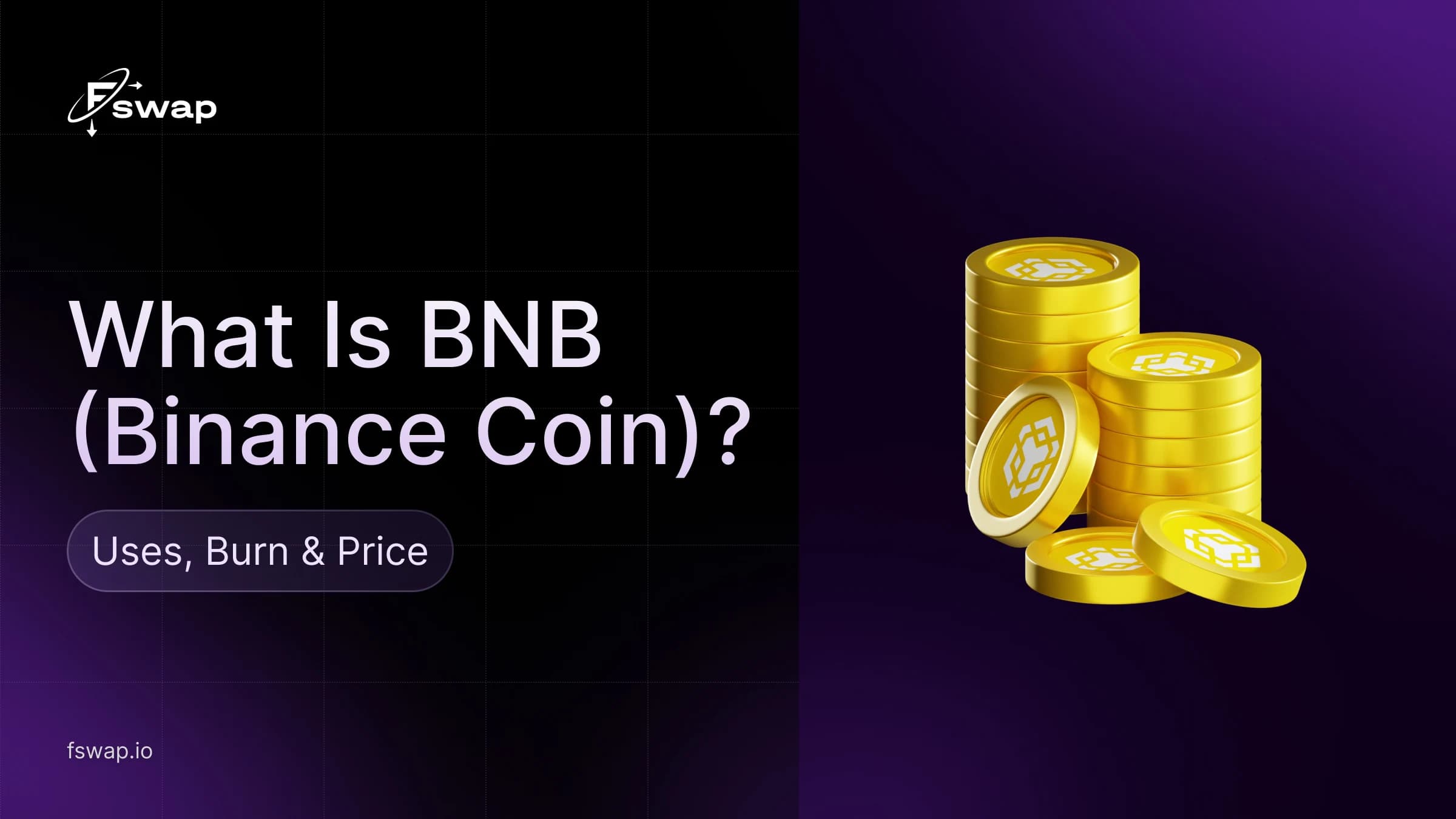
You've probably seen BNB sitting near the top of every market-cap ranking, just behind Bitcoin and Ethereum — yet plenty of people trade on Binance for years without knowing what the token actually does. Is it a discount coupon for trading fees? A share in the world's largest exchange? The fuel that runs a blockchain? BNB (Binance Coin) is quietly all three at once, and unlike most coins, its supply is designed to shrink every quarter.
By the end of this guide, you'll understand what BNB is, where it came from, what it's actually used for, how its burn mechanism keeps reducing supply, what drives the BNB price, and how to swap into BNB directly from your own wallet.
What is BNB?
BNB is the native cryptocurrency of BNB Chain, the blockchain ecosystem built by Binance — the largest crypto exchange by trading volume. Originally called Binance Coin, the token now goes by just "BNB," which the team says stands for "Build and Build." It powers a whole network rather than sitting on top of someone else's.
At its core, the BNB coin does three jobs: it pays transaction (gas) fees on BNB Chain, it gives discounts when you use it to cover trading fees on Binance, and it acts as the economic backbone for staking, governance, and apps across the ecosystem. As of mid-2026, BNB consistently ranks among the top five cryptocurrencies by market capitalization.
From Binance Coin to BNB: a short history
BNB launched in July 2017 through an ICO, about a week before the Binance exchange opened for trading. It started life as an ERC-20 token on Ethereum — the same family of standards we cover in our breakdown of how token standards like ERC-20 and TRC-20 differ.
- 2017 — ERC-20 launch. BNB is issued on Ethereum with a total supply of 200 million tokens, mainly as a way to get discounts on Binance trading fees.
- 2019 — Binance Chain. BNB migrates to Binance's own blockchain (later renamed BNB Beacon Chain) as a BEP-2 token, swapped 1:1 with the old ERC-20 version.
- 2020 — Smart contracts. Binance launches BNB Smart Chain (BSC), an EVM-compatible chain that runs smart contracts and DeFi apps, with BNB as its gas token.
- 2022 — One BNB Chain. The Beacon Chain and Smart Chain are unified under the "BNB Chain" brand, and Binance Coin is rebranded simply as BNB.
- 2024 — Beacon Chain sunset. The original Beacon Chain is retired, leaving BNB Smart Chain, the opBNB layer-2, and the Greenfield storage network as the ecosystem's core.
What is BNB used for?
BNB is a utility token, which means its value is tied to what you can do with it rather than a claim on any company's revenue. The main uses:
- Gas fees. Every transaction or smart-contract call on BNB Smart Chain and opBNB is paid in BNB, the same way ETH pays for Ethereum. If you're moving BNB, it helps to know which network you're on — our guide on how to choose the right network explains why that matters.
- Trading-fee discounts. Pay your Binance trading fees with BNB and you receive a discount, historically up to 25%.
- Launchpad and Launchpool. Holding or staking BNB lets you join new token sales and farm newly listed tokens.
- Staking and governance. Staking BNB helps secure the chain and earns rewards, and it gives holders a say in protocol decisions.
- Payments and DeFi. Thousands of apps across BNB Chain use BNB for lending, trading, NFTs, and everyday on-chain payments.
How does the BNB burn work?
BNB is deflationary by design: the supply is meant to fall from the original 200 million tokens to a final target of 100 million. Two mechanisms drive that:
- Quarterly Auto-Burn. Each quarter, a formula based on BNB's price and the number of blocks produced on BNB Smart Chain decides how many tokens to permanently destroy. The amounts are published openly, and dozens of these burns have already taken place.
- Real-time burn (BEP-95). A fixed share of the gas fees in every block is burned automatically, so supply drops a little with each transaction.
Because new tokens aren't minted to replace what's burned, the circulating supply keeps trending down — roughly 133 million BNB were in circulation by mid-2026, on the way toward the 100 million target.
What drives the BNB price?
Like any crypto asset, the BNB price (often quoted as BNB to USD) moves with overall market sentiment, but a few factors are specific to this token:
- Shrinking supply. The ongoing burn reduces the number of BNB coins over time, which can support the price if demand holds steady.
- Ecosystem activity. More apps, users, and transactions on BNB Chain mean more demand for BNB as gas.
- Binance's health. Because the token is tied to the exchange, news and regulation around Binance tend to move BNB more than the broader market.
None of this is a prediction. Supply mechanics and adoption are inputs, not guarantees, and the BNB price can fall as easily as it rises.
How to get or swap BNB
You can buy BNB with fiat on many exchanges, but if you already hold crypto, the most direct route is a crypto-to-crypto swap — no new account, and the BNB lands straight in your wallet. This is where a non-custodial platform like Fswap fits: you connect your wallet, choose the pair (say USDT or ETH to BNB), and the converted BNB arrives without an exchange holding your funds in between. If you're new to how that conversion works under the hood, our explainer on how token swaps work walks through what a wallet approval actually authorizes.
Whichever route you choose, double-check you're receiving BNB on the network you intend to use — usually BNB Smart Chain (BEP-20) — so your tokens land where your wallet and apps expect them.
Frequently asked questions
Is BNB the same as Binance Coin?
Yes. BNB was originally called Binance Coin. The project rebranded it to simply "BNB" in 2022, but both names refer to the same token.
What is BNB used for?
BNB pays gas fees on BNB Smart Chain and opBNB, gives discounts on Binance trading fees, and is used for staking, governance, Launchpad sales, and thousands of apps across BNB Chain.
How many BNB coins are there?
BNB launched with 200 million tokens and is being burned down toward a target of 100 million. By mid-2026, around 133 million were still in circulation.
Why does BNB get burned?
Burning permanently removes tokens from supply. BNB uses a quarterly Auto-Burn plus a real-time burn of part of every block's gas fees, gradually reducing supply toward 100 million.
What network does BNB use?
BNB is the native asset of BNB Smart Chain (BSC), where it usually follows the BEP-20 standard. It's also used on the opBNB layer-2 and the Greenfield storage network.
The bottom line
BNB started as a simple fee-discount token and grew into the native asset of one of the busiest blockchain ecosystems in crypto. It pays for gas, unlocks discounts and features on Binance, secures the network through staking, and gets steadily scarcer thanks to its burn mechanism.
Once you understand those roles — utility, ecosystem demand, and shrinking supply — you understand most of what makes BNB tick. And when you're ready to hold some, a crypto-to-crypto swap from your own wallet is the most direct way to get it without handing your funds to a middleman.
This article is educational content, not financial advice. Cryptocurrency prices are volatile; always do your own research before buying, swapping, or holding any asset, including BNB.
Diğer makaleler